13
Nov 13

Bodley A, Round 2

[pgn eo=t autoplayMode=none pieceFont=alpha ss=64 ps=64 h=800 commentsDisplay=newline]
[Event “Bodley A”]
[Site “St.Benildus Chess Club”]
[Date “2013.11.13”]
[Round “2”]
[White “Peter Urwin”]
[Black “Mark Dennehy”]
[Result “1-0”]
[WhiteElo “1297”]
[EventDate “2013.11.13”]
[Annotator “Stockfish 09-06-13 64bit”]

1. e4
{+0.24}
1. … c6
{+0.52}

2. d4
{+0.60}
2. … d5
{+0.60}

3. Nc3
{+0.44}
3. … dxe4
{+0.48}

4. Nxe4
{+0.56}
4. … Bf5
{+0.40}

5. Ng3
{+0.40}
5. … Bg6
{+0.44}

6. Nf3 $201
{+0.36}
6. … h6 $2 $16 $201
{+2.10 / +0.36
And here I got my opening variations a tad confused. Nd7 is probably better here, but Bh7 is still a defence from Nfe5. }

( 6…Nd7 7.Be2 Ngf6 8.O-O e6 9.Bg5 Bd6 10.c4 h6 11.Bxf6 Qxf6 12.Bd3 O-O-O 13.Ne4 Bxe4 14.Bxe4 Kb8 15.Qb3 Ka8 16.Rae1 Bc7 17.Qc2 g5 18.d5 exd5 19.cxd5 $10 )

7. Bd3 $2 $10
{+0.40 / +2.10
Okay, so either swap off the light squared bishop, which isn’t the one I’m worried about, or disrupt my pawns in front of where my king will be. Bh7 would let the rook do the recapture, but then I can’t castle kingside as planned. }

( 7.Ne5 Qd6 8.Bf4 $16 )

7. … Bxd3
{+0.52
Not ideal, but not too horrible.}

8. Qxd3
{+0.44}
8. … e6
{+0.44}

9. Bd2 $201
{+0.36}
9. … Be7 $6 $14 $201
{+1.17 / +0.36
Would Nf6 have been that much better? I might have been gunshy of Bd6 after the last time, but it would have prevented Ne5 being so strong, maybe…}

( 9…Nf6 10.O-O Be7 11.c4 O-O 12.Rfe1 Nbd7 13.Bc3 Qc7 14.b3 Rfe8 15.Rad1 Rad8 16.Qc2 Ng4 17.Ne4 Ngf6 18.Nxf6+ Nxf6 19.Ne5 Nd7 20.Nd3 Bd6 21.h3 Nf6 22.g3 $10 )

10. O-O $6 $10 $201
{+0.44 / +1.17}

( 10.Nh5 Bf6 11.O-O Nd7 12.Rad1 Ne7 13.Qb3 Qb6 14.Qa3 Nf5 15.Nxf6+ gxf6 16.Rfe1 Rg8 17.g3 Qa6 18.Qxa6 bxa6 19.Kg2 O-O-O 20.c4 Nb6 21.Ba5 Kb7 22.c5 $14 )

10. … Qb6 $6 $16 $201
{+1.65 / +0.44
That’s worrying; I can’t see after the game why I made this move. I must have been eyeing b2 even at this point. Sod.}

( 10…Nf6 11.c4 O-O 12.Rfe1 Nbd7 13.Bc3 Qc7 14.Rad1 Rad8 15.Nf5 $10 )

11. a4 $6 $10 $201
{+0.40 / +1.65}

( 11.Nh5 Kf8 12.Nf4 Nf6 13.Rae1 Nbd7 14.Nxe6+ fxe6 15.Rxe6 Qxb2 16.Rfe1 Bb4 17.Bxb4+ Qxb4 18.a3 Qa5 19.Nh4 Kg8 20.Ng6 Rh7 21.Qb3 $16 )

11. … Qxb2 $4 $18
{+8.08 / +0.40
Facepalm. And ironically, I really didn’t want to make the move, but all the worry over not playing aggressively enough messed up my head.}

( 11…Nf6 12.Rfe1 Qc7 13.Ne4 O-O 14.Nxf6+ Bxf6 15.Qe4 Nd7 16.Bf4 Qb6 17.a5 Qb5 18.Re3 Rfd8 19.Rb3 Qa6 20.Bc7 Re8 21.h3 Be7 22.Qd3 Qxd3 $10 )

12. Rfb1
{+8.00
And there it is. Wallop.}
12. … Qxa1
{+7.83
Well, it has to be one of them, and at least this one doesn’t give him the B-file without a tempo. Just, you know, the game. }

13. Rxa1
{+7.91}
13. … Nf6
{+7.87
Yeah, sensible move, where were you three moves ago?}

14. Ne5
{+7.91
That’s a nasty outpost. Qc7 should fix… oh, right.}
14. … O-O $201
{+8.00}

15. c3 $18
{+6.98 / +8.00}

( 15.Rb1 b6 16.Qf3 Kh7 17.a5 $18 )

15. … c5 $201
{+7.67
The idea being to dislodge Ne5 in a few moves.}

16. Ne4 $18
{+6.42 / +7.67
Didn’t expect this (neither do the engines) but Ne5 can still be kicked, it’s just going to mean both knights go off, which I don’t like when material down, but this game’s a bust anyway and I don’t like Ne5 at all.}

( 16.Qb5 b6 17.a5 a6 18.Qxb6 Nbd7 19.Nxd7 Nxd7 20.Qb7 Rfd8 21.Re1 cxd4 22.cxd4 Bf6 23.Be3 Be7 24.Bf4 g5 25.Bc7 Re8 26.Ne4 Nf6 27.Nc5 Nd5 28.Be5 Red8 29.Nxa6 Bf6 30.Bxf6 Nxf6 31.Rb1 Nd5 32.Rc1 Nf4 33.Rc2 Nd5 $18 )

16. … cxd4
{+6.42}

17. Nxf6+
{+6.06}
17. … Bxf6 $201
{+6.26}

18. cxd4 $6 $18 $201
{+5.41 / +6.26}

( 18.Ng4 Nd7 19.cxd4 Rfd8 20.Qf3 b6 21.Nxf6+ Nxf6 22.Bxh6 Rd5 23.Bg5 Nh7 24.Be3 Rc8 25.Qe2 Nf6 26.Qa6 Rc7 27.a5 Rxa5 28.Rxa5 bxa5 29.Bf4 Rc2 30.Qxa5 Rb2 31.g3 Nd5 32.Bd6 $18 )

18. … Nc6 $2 $18 $201
{+7.37 / +5.41}

( 18…Rd8 19.Qe4 Nc6 20.Be3 $18 )

19. Nxc6 $18
{+6.26 / +7.37}

( 19.Nd7 Bxd4 20.Nxf8 Rxf8 $18 )

19. … bxc6 $201
{+6.14
And that’s exactly how I thought it would go.}

20. Qe4 $6 $18 $201
{+5.09 / +6.14
Why not Rb1 or Rc1?}

( 20.Rc1 Rfd8 21.Be3 Rd6 22.Qa6 Bxd4 23.Bxd4 Rxd4 $18 )

20. … Rac8 $6 $18
{+6.06 / +5.09
Engines say c5 instead, but I just saw c5, dxc, Rac8 then anyway and then Rac1 and c6, c7 and his queen can waltz in and wreak havoc while the rook’s pinned. }

( 20…c5 21.Rb1 $18 )

21. Rc1
{+6.06}
21. … Rcd8
{+6.62
Really wish I’d moved the other rook here…}

22. Be3
{+6.54}
22. … Rfe8
{+6.94}

23. Rxc6
{+6.94
And now I’m looking for a way to drop a rook onto the back rank because there’s sod all else will save me!}
23. … e5
{+10.56
G’wan, take the pawn, I’m harmless, me, I mean why else would I weaken e6 like that?}

24. d5
{+10.74
Sod.}
24. … a5
{+10.97
Well, it was hanging.}

25. Bxh6
{+10.48
gxB, Qg4+, Kh7 or Kf8, RxB and stuffed. No thanks…}
25. … Rc8 $201
{+98.68
RxR, RxR, then gxB and the Qa4 and run away king and then Rc1+ but we’re out where the busses do not go with that one I think.}

26. Bd2 $18
{+13.05 / +98.68
Bit of a blunder that, did he think he hadn’t much choice maybe?}

( 26.Rxf6 Rb8 27.Qf5 Re7 28.g3 Rd8 29.Qg5 Kf8 30.Qxg7+ Ke8 31.Qf8+ Kd7 32.Rd6+ Kxd6 33.Qxd8+ Rd7 34.Bf8+ Kxd5 35.Qxd7+ Kc4 36.Qxf7+ Kd4 37.Qa7+ Kd5 38.Qc5+ Ke4 39.f3+ Kd3 40.Qxe5 Kc2 $18 )

26. … Red8
{+16.94
a5’s hanging, but I was focussed on RxR, dxR, RxB for some reason. }

27. Rxc8
{+17.01
Maybe he was too}
27. … Rxc8
{+12.96}

28. g3
{+15.95
And there goes the last hope out the window.}
28. … Re8
{+19.13
Thinking to free the bishop.}

29. Bxa5
{+21.01}
29. … Kf8 $201
{+42.47
Thought during the game that I couldn’t really move the bishop without this first. In hindsight, not so convinced of that.}

30. Qb4+ $18
{+23.56 / +42.47
And pretty much everything’s forced from here.}

( 30.d6 g6 31.d7 Re6 32.Qa8+ Kg7 33.Bb4 Kh7 34.Qf8 Bg7 35.Qxf7 Rf6 36.Qd5 e4 37.Qxe4 Rf5 38.d8=Q Rh5 39.Bd2 Rf5 40.Qe6 Bf8 41.a5 Rf3 42.Qh4+ Kg7 43.a6 Rxg3+ 44.fxg3 Bc5+ 45.Be3 Bxe3+ 46.Qxe3 $18 )

30. … Be7
{+92.85}

31. d6
{+92.85}
31. … f5
{+108.90}

32. dxe7+
{+108.90}
32. … Rxe7 $201
{+327.43}

33. Qb8+ $18
{+96.07 / +327.43}

( 33.Bd8 Kf7 34.Qxe7+ Kg6 35.Bc7 Kh7 36.Bxe5 Kg6 37.Qxg7+ Kh5 38.h4 f4 39.Qg5# $18 )

33. … Re8
{+96.12
Or Kf7 but it’s a fairly done deal by now anyway.}

34. Bb4+
{+96.12}
34. … Kf7 $201
{+96.12}

35. Qxe8+ $18
{+89.24 / +96.12
Didn’t quite expect that, but okay.}

( 35.Qc7+ Kg8 36.Bc3 Rf8 37.Bxe5 Rf7 38.Qxf7+ Kxf7 39.a5 Ke6 $18 )

35. … Kxe8
{+89.24}

36. Bc3
{+89.24
Ah, right. Fudge. Well, save the forward ones I suppose.}
36. … e4
{+105.94}

37. Bxg7
{+105.94}
37. … Kd7
{+119.93
Well, we’re inside the square for a4 at least I suppose.}

38. h4
{+107.25
Ah, bugger. Can’t fight off the two wing pawns. Resigned.}

( 38.h4 {21:+107.25} 38…Ke6 39.a5 Kd6 40.a6 Kc6 41.h5 e3 42.fxe3 Kb6 43.a7 Kxa7 44.h6 Kb6 45.h7 Kb7 46.h8=Q Kc7 47.Qe8 f4 48.gxf4 Kb6 49.Qe6+ Kb5 )

1-0[/pgn]

11
Nov 13

Bodley A Round 1

[pgn eo=t autoplayMode=none pieceFont=alpha ss=64 ps=64 h=800 commentsDisplay=newline]
[Event “Bodley A 2013/4”]
[Site “Drogheda Chess Club”]
[Date “2013.11.02”]
[Round “1”]
[White “Jonathon Tsang”]
[Black “Mark Dennehy”]
[Result “1-0”]
[WhiteRating “945”]
[EventDate “2013.11.02”]
[Annotator “Stockfish 09-06-13 64bit”]

1. e4 c6
2. d4 d5
3. exd5 cxd5
4. Nf3 {Nf3 here? Odd…}
4. … Nf6 {Well, that should have been Bf5 but I think Nf3 threw me..}
5. Be2 {This… is not the caro kann mainline!}
5. … Bf5 {Right, back on track.}
6. O-O
6. … e6
7. Nc3
7. … Bd6 {Was thinking Be7 but Bd6 looked better because of the b8-h2 diagonal.}
8. Nb5 {Well, that was to be expected I suppose.}
8. … O-O {Giving up the bishop for a gain in development. Which I think in hindsight was a serious error.}
9. Nxd6
9. … Qxd6
10. Ne5
10. … Nc6 {Hoping for NxN followed by QxN and taking the c-file}
11. Bf4 {I hate that bishop. Sooooo much.}
11. … Qe7 {Worrying about Ng6 winning a rook.}
12. Nxc6
12. … bxc6 {Okay, no c-file, but there’s that nice b-file instead….but I can’t Rb8 because of BxR}
13. c4
13. … Rac8? {Expecting cxd, cxd and owning the c-file. The engines have a different suggestion though.}
14. c5 {Oh. Yeah, chess, not checkers . And now Bd6 is a bit of a nasty threat. Need to guard the d6 square.}
14. … Ne8
15. Ba6
15. … Rd8 {Ra8 would just exile the rook. }
16. Qb3 {Looking to Qb7, and now QxQ , BxQ, Bd6? Ugh.}
16. … e5?!
{Blocking off the line to d6, even if the pawn’s hanging as a result. The engines spot this as a really bad idea though.}
17. Rfe1
17. … f6
{Defends e5 and gives an ecape route for Rf and Q, but opens the diagonal for an attack on the king. But Bf5 is there to help out.}
18. Rac1?!
{I never saw this in the game or immediately after, but the engines highlighted this as a bit of a blunder}
18. … g5?!
{GO AWAY!}
19. Bg3
{Yay!}
19. … Nc7
{Now that Bg3 has happened, get on with the game.}
20. Bb7?
{Odd. I expected Qb7 at this point and then Rb8 to counter. The engines expected Bf1…}
20. … Nb5?
{Going after the d4 fork point against Q&B but the engines have the better line}
21. Bxc6
21. … Nxd4
22. Bxd5+ {And now we’re committed to the exchange to come, but I’d counted that and can come out equal.}
22. … Be6
23. Bxe6+
23. … Qxe6
24. Qxe6+
24. … Nxe6 {Okay, that went as foreseen. }
25. c6
25. … Rd2 {Thinking that the knight can block the c pawn and this gives me a rook on the 7th.}
26. c7
26. … Nd4?? {I think I fell asleep here and just looked at the Ne2 fork. Stupid. Rc8 was so much better. This is the mistake that threw the game away.}
27. c8=Q
27. … Rxc8
28. Rxc8+ {Ah. Right. Miscounted that.}
28. … Kg7
29. Rc7+
29. … Kg6
30. Kf1
30. … Nf5
31. Rxa7
31. … Nxg3+
32. hxg3
32. … Rxb2 {Why not? It’s free…}
33. a4
33. … Ra2 {Get in behind the passed pawn.}
34. a5
34. … h5
35. a6
35. … Kf5 {To avoid checks from behind}
36. f3
36. … h4
37. Re2
37. … Ra1+
38. Kf2
38. … Ra4
39. g4+
39. … Kf4 {And from here on the engines have this as a waste of time….}
40. Re4+
40. … Rxe4
41. fxe4
41. … Kxg4
42. Rf7
42. … h3
43. gxh3+
43. … Kxh3
44. Rxf6
44. … g4
45. Rh6#
1-0[/pgn]


11
Nov 13

Bodley A, Round 1

A big part of joining the local chess club was to enter the leinster leagues this year and get a few solid games. So I’m now playing in the Bodley Cup, Group A on the Benildus B team. The Bodley is division 6 in the leagues, and they have too many teams this year so they’ve split them into two groups. A isn’t better than B, they’re meant to be even and the winners in each will play each other for the final title. There’s talk of resurrecting division seven next year to cope with the increase in numbers. And yeah, I don’t know why Benildus A is in Bodley B, and Benildus B is in Bodley A either. And it doesn’t help when at the club they start talking about the Bodley A or Bodley B team and I lose track of who they’re on about 😀 Anyway…

The matches (by the way, I’m writing this for those who don’t play much OTB chess in Ireland and don’t know this, those of you who do play chess in clubs, sorry to bore you 🙂 ) use a standard time control of 90 minutes per side, so they can run to a maximum of three hours; there’s one roughly every two weeks, and the home games just happen on the normal club night and the away matches either happen on the other team’s club night if they’re close by or on Saturday afternoon if they’re a bit of a drive away. And you don’t have to (or even get to) play in every match – the club submits a panel of players and for every match chooses five players to play (who are then put on boards one through five in order of ability). So out of the nine matches Benildus B will play in, I would only expect to play in six of them at most. But I was on the cards for the first match, if only because as one of the only adults on the team, I can drive 😀

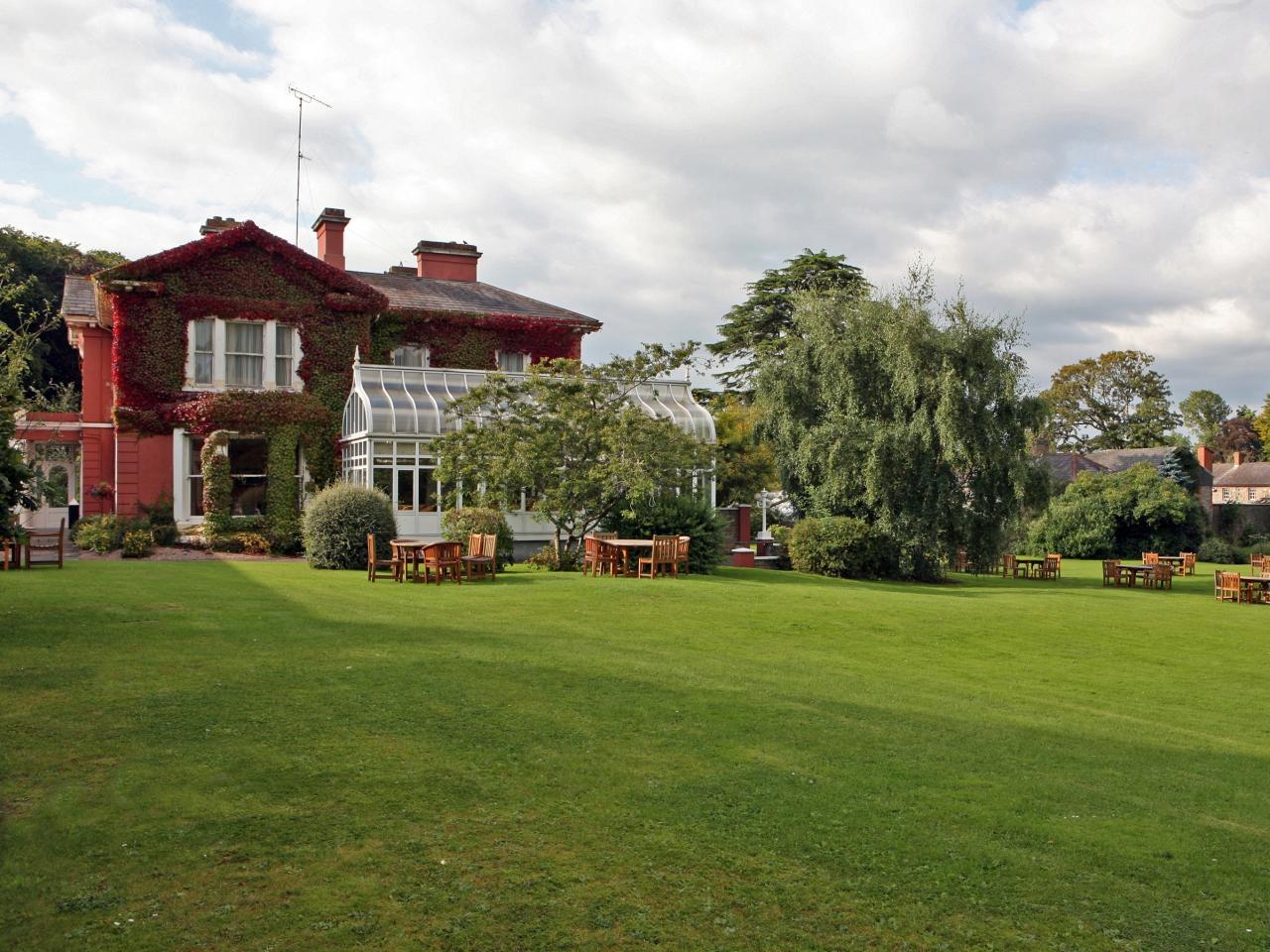
The first match was an away match on the Saturday the weekend before last (yes, this took a while to write, but they released Battlefield 4 in the interim 😛 ) against Drogheda Chess Club. Nice digs:

Boyne Valley Hotel

Arrived ten minutes before the start (if this was a target shooting match I’d want more time, but for chess, not so much), said hello to the other players, Kevin (the team captain) did the little bit of paperwork we had, and then we kicked off. I was playing board 4, and my opponent was a junior as usual (if you’re an adult starting off in chess, that’s something you just have to get used to) and had the white pieces. We went straight into a Caro-Kann opening as I was expecting we would, and it didn’t go too badly for most of the game, but towards the end I made a horrible blunder and it basicly threw the game away, which was a bit disappointing as it had been going well enough and it was probably the one move of the game where I didn’t have my “slow down” mantra running through my head. Here’s the game, with annotations:

[pgn eo=t initialHalfmove=65 autoplayMode=none pieceFont=alpha ss=64 ps=64 h=800 commentsDisplay=newline]
[Event “Bodley A 2013/4”]
[Site “Drogheda Chess Club”]
[Date “2013.11.02”]
[Round “1”]
[White “Jonathon Tsang”]
[Black “Mark Dennehy”]
[Result “1-0”]
[WhiteRating “945”]
[EventDate “2013.11.02”]
[Annotator “Stockfish 09-06-13 64bit”]

1. e4 c6
2. d4 d5
3. exd5 cxd5
4. Nf3 {Nf3 here? Odd…}
4. … Nf6 {Well, that should have been Bf5 but I think Nf3 threw me..}
5. Be2 {This… is not the caro kann mainline!}
5. … Bf5 {Right, back on track.}
6. O-O
6. … e6
7. Nc3
7. … Bd6 {Was thinking Be7 but Bd6 looked better because of the b8-h2 diagonal.}
8. Nb5 {Well, that was to be expected I suppose.}
8. … O-O {Giving up the bishop for a gain in development. Which I think in hindsight was a serious error.}
9. Nxd6
9. … Qxd6
10. Ne5
10. … Nc6 {Hoping for NxN followed by QxN and taking the c-file}
11. Bf4 {I hate that bishop. Sooooo much.}
11. … Qe7 {Worrying about Ng6 winning a rook.}
12. Nxc6
12. … bxc6 {Okay, no c-file, but there’s that nice b-file instead….but I can’t Rb8 because of BxR}
13. c4
13. … Rac8? +/-
{Expecting cxd, cxd and owning the c-file. The engines have a different suggestion though.}
( 13…dxc4 14.Qc1 Nd5 15.Bxc4 Nxf4 16.Qxf4 Qb4 17.b3 Rfd8 18.Rfd1 h6 19.Qd2 Qb6 20.Qc3 Rd7 21.Rd2 Rad8 22.Rad1 Qc7 23.f3 a5 = )
14. c5 {Oh. Yeah, chess, not checkers . And now Bd6 is a bit of a nasty threat. Need to guard the d6 square.}
14. … Ne8
15. Ba6
15. … Rd8 {Ra8 would just exile the rook. }
16. Qb3 {Looking to Qb7, and now QxQ , BxQ, Bd6? Ugh.}
16. … e5?! +/-
{Blocking off the line to d6, even if the pawn’s hanging as a result. The engines spot this as a really bad idea though.}
( 16…Qd7 17.Qb7 f6 18.Bg3 g5 19.Rae1 Rf7 20.Qb3 h5 21.h3 Ng7 22.Be2 h4 23.Bd6 Bh7 24.Bh2 Nf5 25.Qb4 Rg7 += )
17. Rfe1
17. … f6
{Defends e5 and gives an ecape route for Rf and Q, but opens the diagonal for an attack on the king. But Bf5 is there to help out.}
18. Rac1?! +=
{I never saw this in the game or immediately after, but the engines highlighted this as a bit of a blunder}
( 18.dxe5 Qd7 19.Qa4 Rf7 20.exf6 Nxf6 21.f3 Ne8 22.Bf1 Bc2 23.b3 Ra8 24.Rac1 Bf5 25.Be5 Nc7 26.b4 Bg6 +/- )
18. … g5?! +/-
{GO AWAY!}
( 18…Nc7 19.Qa4 Nxa6 20.Qxa6 Qc7 21.Bg3 Rde8 22.a3 Rf7 += )
19. Bg3
{Yay!}
19. … Nc7 D
{Now that Bg3 has happened, get on with the game.}
20. Bb7? D
{Odd. I expected Qb7 at this point and then Rb8 to counter. The engines expected Bf1…}
( 20.Bf1 Bd7 21.dxe5 Ne6 22.f3 f5 23.Qc3 f4 24.Bf2 a5 25.Bd3 Ra8 26.Red1 Rfb8 27.Qc2 Be8 28.Bf5 Nf8 29.Bd4 Ne6 30.Bc3 Bd7 31.Bd2 Nd4 +/- )
20. … Nb5? +=
{Going after the d4 fork point against Q&B but the engines have the better line}
( 20…Rb8 21.dxe5 Ne6 )
21. Bxc6
21. … Nxd4
22. Bxd5+ {And now we’re committed to the exchange to come, but I’d counted that and can come out equal.}
22. … Be6
23. Bxe6+
23. … Qxe6
24. Qxe6+
24. … Nxe6 {Okay, that went as foreseen. }
25. c6
25. … Rd2 {Thinking that the knight can block the c pawn and this gives me a rook on the 7th.}
26. c7
26. … Nd4?? +- {I think I fell asleep here and just looked at the Ne2 fork. Stupid. Rc8 was so much better. This is the mistake that threw the game away.}
( 26…Rc8 27.h4 gxh4 28.Bxh4 Kf7 29.Re3 Rxc7 30.Rxc7+ Nxc7 31.Rb3 Nd5 32.Rb7+ Kg6 33.Rxa7 Rxb2 = )
27. c8=Q
27. … Rxc8
28. Rxc8+ {Ah. Right. Miscounted that.}
28. … Kg7
29. Rc7+
29. … Kg6
30. Kf1
30. … Nf5
31. Rxa7
31. … Nxg3+
32. hxg3
32. … Rxb2 {Why not? It’s free…}
33. a4
33. … Ra2 D {Get in behind the passed pawn.}
34. a5 +-
( 34.g4 h5 35.gxh5+ Kxh5 36.Ra6 f5 37.Rxe5 Kg4 38.f3+ Kf4 39.Raa5 +- )
34. … h5
35. a6
35. … Kf5 {To avoid checks from behind}
36. f3
36. … h4
37. Re2 +-
( 37.g4+ Ke6 38.Ra8 Kd5 39.a7 Kc6 40.Rd8 Rxa7 41.Rc1+ Kb7 42.Rd7+ Kb6 43.Rb1+ Kc6 44.Rxa7 Kc5 45.Rc1+ Kd6 46.Re1 Kc5 47.Ra6 f5 48.gxf5 Kb5 49.Rxe5+ Kb4 50.f6 +- )
37. … Ra1+
38. Kf2
38. … Ra4
39. g4+
39. … Kf4 {And from here on the engines have this as a waste of time….}
40. Re4+
40. … Rxe4
41. fxe4
41. … Kxg4
42. Rf7
42. … h3
43. gxh3+
43. … Kxh3
44. Rxf6
44. … g4
45. Rh6#
1-0[/pgn]

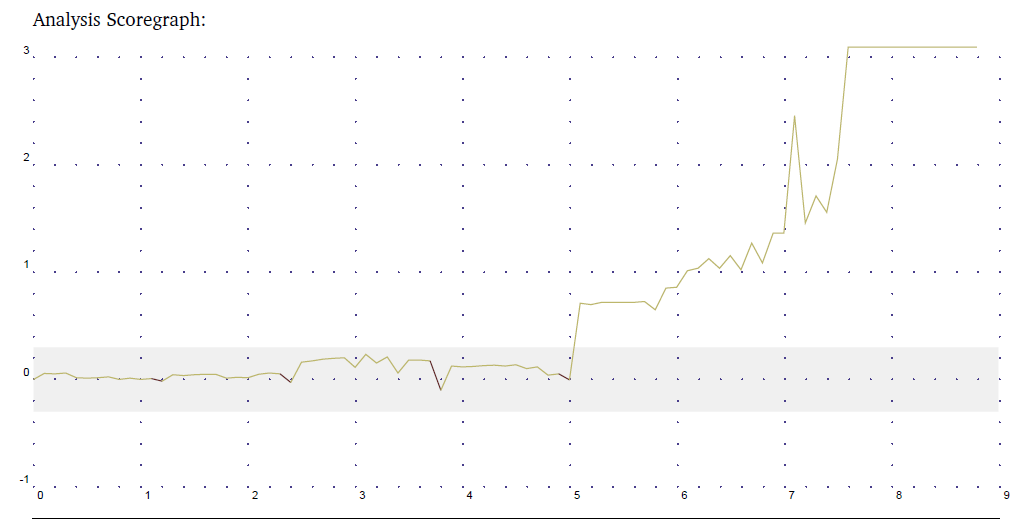
As you can see from the analysis graph, the game’s more or less even (at least at this sort of level – I’m sure the guys who’ve been doing this for 30 years would see far more weaknesses, but they play in a different division 😀 ) up until 26 …Nd4 at which point the whole thing goes pear-shaped and never recovers:

Bodley A Round 1

But still not a bad game and a decent enough start to things. The team reports on the match are here from the Benildus side and here from the Drogheda side.

Probably the most interesting part of all this though, is the postmortem analysis in the club on the following club night with the higher-ranking players. The engines are good at showing where you went wrong and evaluating what might be better, but the humans are still better at figuring out why you did something or didn’t do something and how to improve. For example, John suggested on move 13 playing …Qb7, which would not only have dealt with the threat of white playing Bd6, but would have given me a much better shot at winning too. Rats. I still play too passively it would seem, something to work on in future…

The next match is this Wednesday in Benildus, against Gonzaga who are the favorites to win the division overall.